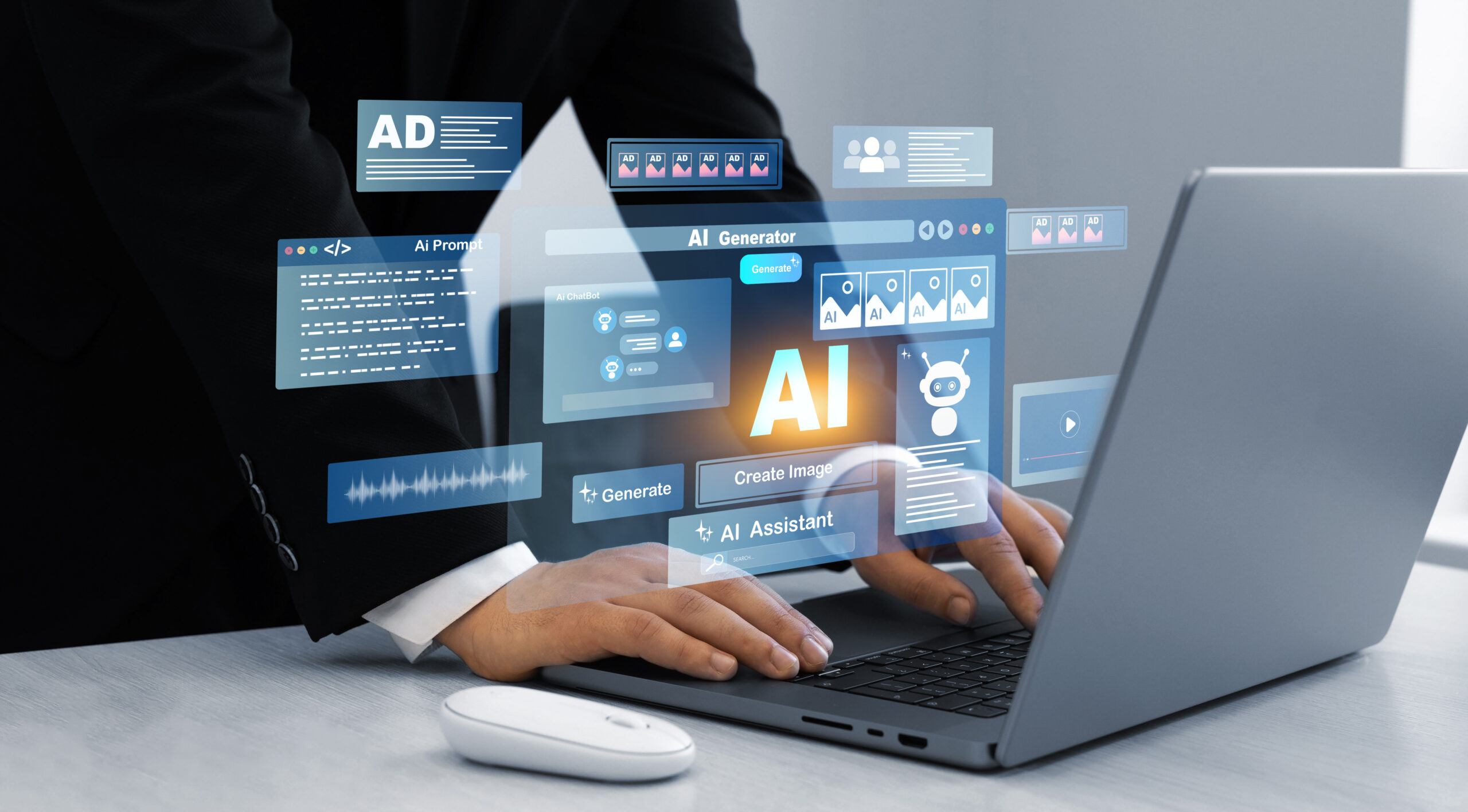
AI was once thought to be a futuristic concept, but today it’s reshaping the way we work. In today’s fast-paced world, maximising productivity is essential to staying ahead. Whether you are a student, an entrepreneur or a corporate professional, the emergence of artificial intelligence (AI) is a powerful tool that can be used for streamlining workflows, supporting decision-making, and automating mundane tasks.
Within this blog post, we’ll explore:
1. How AI Can Enhance Productivity
2. The Practical Ways That AI Can Be Integrated into Your Daily Workflow and The Best AI Tools for Different Tasks
3. The Potential Challenges and Ethical Considerations
By the end, hopefully, there will be a clearer understanding of how to leverage AI to help you work smarter, not harder.
1. How AI Can Enhance Productivity
AI can be used to improve productivity by:
• Automating repetitive tasks: Doing tasks that are repetitive through the automation process. Daily tasks such as data entry or scheduling can be done through the use of AI, which allows for time to be freed up, allowing for a more productive day.
• Supporting decision-making: When AI is used within decision-making, it allows for more insights from larger datasets, which can help businesses and individuals with data-driven decision-making.
• Enhancing communication: It helps with improved communication – AI tools like ChatGPT or Microsoft Copilot improve communication by drafting emails, summarising meetings, and generating reports.
• Optimising time management: AI can enhance time management by analysing work habits and suggesting optimal scheduling, task prioritisation, and productivity strategies.
2. The Practical Ways That AI Can Be Integrated Into Your Daily Workflow (With Best Tools):
I believe the tools listed below are the best suited for the tasks described:
Automated Administrative Tasks
Email management:
• The mundane task of replying to emails can be helped with tools such as Google Smart Reply, which uses AI to suggest quick email responses.
• When we get to work in the morning, we have to read and filter through various emails that have been shared with us, and this takes time. An AI tool called Superhuman cuts down the time needed to filter these emails into important or not.
Tasks That Require Writing or Content Creation
Drafting and inspiration:
• Whether drafting an email or preparing a report, at times we feel stuck and uncertain where to begin – ChatGPT can assist with that initial inspiration.
• We all have that moment of being unable to put something into words that is clear and easy for the other party to understand. Quillbot is ideal for paraphrasing and refining texts for clarity.
The Use of Voice Assistants For Hands-Free Productivity
• Voice assistants:
• Google, Bixby, or Siri—allow hands-free productivity, by setting reminders, sending messages, and managing tasks without lifting a finger.

3. The Potential Challenges and Ethical Considerations:
So that’s it, we should adopt AI into our everyday lives as it greatly improves our workflow and general day-to-day lives. Well, not really…
• Overreliance on AI: We are creatures of comfort, and with that, we will start to become reliant on AI to do all the heavy lifting and work for us. This leads to the loss of critical thinking skills if we rely on it too much. So how do we solve this? Don’t use AI as a replacement for your thinking, but as a tool.
• Security risks: There are security concerns to take into consideration, as we may use AI with personal information and enter sensitive details without really knowing how that data is stored. Well, one solution is to ensure that it is trusted and that encrypted tools are used, such as enterprise-grade security.
• Algorithmic bias: AI learns from the data it is fed, which can introduce bias. Developers must audit algorithms to ensure fairness and use diverse, representative datasets.
• Plagiarism and misinformation: Now onto a massive problem, as the rise of AI is used more within work, it raises the chance of plagiarism or misinformation being spread due to the use of AI content. So, how do we reduce this by making sure that we fact-check our work and add some of our personal touch to AI drafts.
Bottom line: AI is a powerful productivity tool when used wisely. To maximise benefits, integrate AI thoughtfully, maintain critical thinking, and follow ethical best practices. Start exploring AI tools today to streamline your workflow—discover how PSI’s solutions can help you work smarter.